Posts

Showing posts with the label Henry Martin

What is Truth?

 Introduction We see the word "liar" and "lie" bantered about by many from all sides. When opinion is shared, or a story from current events is published, "fact-checkers" come out with the context, or sometimes just opposing opinions to counter the story. So, can we know the truth? When Jesus was on trial for blasphemy, disguised as "treason", Pilate asked "Are you a king?". Jesus answered that he was, and that his purpose was to "bear witness to the truth". Pilate reacted, saying, "What is truth?" (John 18:37-38). Jesus remained quiet, but earlier he had told his disciple Thomas, when he had asked, "How can we know the way?", that "I (Jesus) am the way, the truth, and the life"(John 14:5-6). Later, in praying for his disciples shortly before his betrayal and trial, Jesus prayed to the Father: "Sanctify [my disciples] through the truth: Your word is truth." (John 17:17) But, what does th...
Consolation for all Israel

A month has past since the world celebrated the birth of Christ. But the birth of any child is but a moment. What was the purpose of the coming of Jesus into this sin-cursed world? Two moments after the birth of Jesus set the course for his life's work. The first was his circumcision eight days after his birth. At that time, his name was confirmed by a priest to be "Jesus" (Gr. Yesou, Heb. Yeshuah), which means "The LORD saves". The name was familiar to all Jews as the hero who lead the people in conquering Canaan, the land promised to Abraham. It was a name given to countless boys in hopes that they would grow up to be the one to deliver them from tyrannical empire builders like the Caesars of Rome. On the eighth day a new week begins.  How appropriate that the eighth day of Christmas is our secular "New Year's Day".  The second moment, required by the Law, was the sacrifice at the temple on behalf of the child when its mother became ceremonially ...

As in the Days of Noah (Part 2)

Image
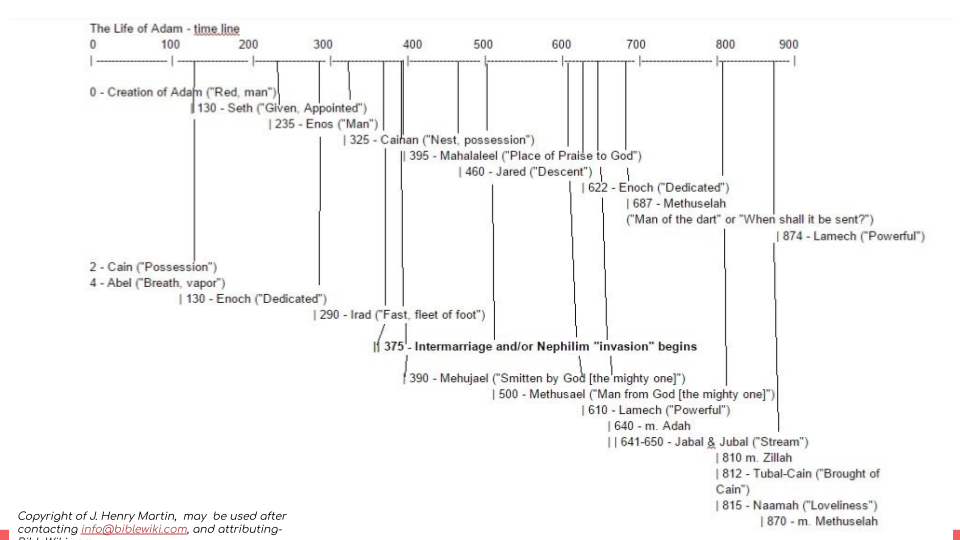
  “When Jared had lived 162 years, he fathered Enoch.” Gen. 5:18 The two families of mankind had probably started to interact before the birth of Jared’s son Enoch . Based on Jared’s name meaning “Descent” it can be imagined that his godly father Mahalaleel (“Place of Praise to God'') had spoken prophetically to the culture. If Jared had followed the trend of the day, it is likely that he may have moved to the city of Enoch. Nothing in the text requires his even marrying within his tribe, or that the mother of Enoch was his first wife. Whatever the case, it was 162 years before the child was born. “ Adah (Lamech’s first wife) bore Jabal [and] Jubal . . .” Gen. 4:20-21 In those same days, assuming the genealogies are concurrent, the greatest leader of the Cainites (likely in the city of Enoch as well) was born to Methusael (“Man from El”) who might have been the high priest of the pagan religion, The boy’s name was Lamech , which means “Powerful”. His children, born of two moth...

As in the Days of Noah (Part 1): The Names in the Antediluvian Record

  "Adam knew Eve, his wife, and she conceived.." Gen. 4:1a In ancient times names were not lightly given. This was especially true in Biblical times. Most, if not all, of the leading persons with origin stories have a definition associated with the name. The first genealogical lists, in the original Hebrew,  present a vivid picture of the world in the early days after creation. The names of Seth and Cain’s descendants depict a timeline of the progression of evil and the worship of God up until the Flood. In this two-part blog series, we are going to explore how the names of people in the Bible tell us about them and the times they were living in.  The naming of the father of mankind is tied to the term "mankind" - that is, as the first of the species, he was simply "the man" (Hebrew: H'Adam) and the name stuck. The narrator states that "H'adam" was made from "H'adamah" (the ground). When he sinned, his fate was tied to that...

Word for Word: Episode 56

Our Home: The Earth וַיֹּ֣אמֶר אֱלֹהִ֗ים יִקָּו֨וּ הַמַּ֜יִם מִתַּ֤חַת הַשָּׁמַ֙יִם֙ אֶל־ מָקֹ֣ום אֶחָ֔ד וְתֵרָאֶ֖ה הַיַּבָּשָׁ֑ה וַֽיְהִי־ כֵֽן׃ וַיִּקְרָ֨א אֱלֹהִ֤ים לַיַּבָּשָׁה֙ אֶ֔רֶץ וּלְמִקְוֵ֥ה הַמַּ֖יִם קָרָ֣א יַמִּ֑ים וַיַּ֥רְא אֱלֹהִ֖ים כִּי־ טֹֽוב׃ And God said to the water under the sky, "Get together into one place, so that which is dry can be seen". And so, it happened. God called the dry stuff "land" and the gathered waters he called "seas". And God saw that it was good.  -- Genesis 1:9-10 (dynamic equivalent translation). The narrative of the creation of the world we know is a bit simplistic to us in that God just seems to tell inanimate matter to act on its own accord. The translation "let [this happen]" to give room for natural laws to just go into affect and form stuff on its own. In the case of water and bedrock, this is quite literally what happens when a liquid flows into a solid bas...

Word for Word: Episode 55

A place called "Heaven" וַיֹּ֣אמֶר אֱלֹהִ֔ים יְהִ֥י רָקִ֖יעַ בְּתֹ֣וךְ הַמָּ֑יִם וִיהִ֣י מַבְדִּ֔יל בֵּ֥ין מַ֖יִם לָמָֽיִם׃ וַיַּ֣עַשׂ אֱלֹהִים֮ אֶת־הָרָקִיעַ֒ וַיַּבְדֵּ֗ל בֵּ֤ין הַמַּ֨יִם֙ אֲשֶׁר֙ מִתַּ֣חַת לָרָקִ֔יעַ וּבֵ֣ין הַמַּ֔יִם אֲשֶׁ֖ר מֵעַ֣ל לָרָקִ֑יעַ וַֽיְהִי־כֵֽן׃  וַיִּקְרָ֧א אֱלֹהִ֛ים לָֽרָקִ֖יעַ שָׁמָ֑יִם And God said "Let a space be in between the waters to separate them." Then God formed a space between the lower waters and the upper waters. That's how it happened. So, God called space "Heaven". -- Genesis 1:6-8a (author's translation) Translators are sometimes forced to choose between interpretations in the use of the Hebrew word "Shamayim". I have followed the Hebrew in uses the most general term to reflect a basic understanding of the act of creation of this space. In order for an artist or an artisan to work, he must have plenty of space. Though the whole universe, as information, migh...

Word for Word: Episode 54

Image
And Light Was. וַיֹּאמֶר אֱלֹהִים יְהִי אֹור וַֽיְהִי־אֹֽור׃ וַיַּרְא אֱלֹהִים אֶת־הָאֹור כִּי־טֹוב וַיַּבְדֵּל אֱלֹהִים בֵּין הָאֹור וּבֵין הַחֹֽשֶׁךְ׃ וַיִּקְרָא אֱלֹהִים ׀ לָאֹור יֹום וְלַחֹשֶׁךְ קָרָא לָיְלָה וַֽיְהִי־עֶרֶב וַֽיְהִי־בֹקֶר יֹום אֶחָֽד׃ And (the)* Mighty One said, "Be Light" and Light was. Then the Mighty One saw the light, that it was good. So The Mighty One separated the light and the darkness. And the Mighty One called Light "Day" and darkness He called "Night". Then there was an evening and there was a dawn: day one. Genesis  1:3-5 (*definite article is not in front of the name “ Elohim ”) What had been a dark mass in a flux, probably collapsing on its own weight, was in a moment transformed as  electromagnetic energy  appeared “out of nowhere”. It is likely that the charged particles had now reached that narrow band that is visible to sentient creatures that had yet to be created. This happened mainly to allow li...

The Path to God

Image
The Path to God Isaiah 40:1-5 Isaiah had been there for years as a voice to the royal house of Judah. The message switches in chapter 40 to one of hope in times of trouble. As with Hosea before him, his message to the people is salvation by grace. The debt they had was too great, so God was going to pay the price. The command to the prophet was to "comfort" the people of God. This didn't mean to make them feel comfortable. But he was to stand alongside then and support them. Instead of despair, there was hope. For sure, hard times were coming--from inside the kingdom and from the outside--but God was in control.  The road ahead was going to be long and obstacles remained, but the path to God was on schedule. It is important to note that the people of God cannot remove the barriers that keep them from the LORD. That path to God is cleared from His side. About 600 years later a latter day prophet named John would point the...

Word for Word: Episode 53

יֹ֥ום הַשִּׁשִּֽׁי The sixth day The sixth day was for the "world" of mankind. The animals were there as companions and the plants were for food. The deep waters of the sea were a mystery left for modern explorers to uncover. The word שִּׁשִּֽׁי ( shishshiy sixth) comes from the cardinal number שֵׁשׁ ( shesh six), which in turn comes from the verb שׂוּשׂ ( süs ) which means "to rejoice". It seems that since the hand has five fingers, one of the most primitive numbers indicated abundance. This aligns with the message of the last creation day. The words new to the reader follow: [ behemah ] בְּהֵמָה , livestock, cattle. [ adam ] אָדָ֛ם , man, mankind, Adam [ tselem ] צֶלֶם , image, likeness [ dem·üth ] דְּמוּת , likeness, similitude; from דָּמָה , to be like, similar [ zä·kär ] זָכָר , male; from the verb זָכַר (zä·kar), to remember [ nĕqebah ] נְקֵבָה , female; from נָקַב ( naqab ), to designate, appoint [ kabash ...

Word for Word: Episode 52

וְהִנֵּה־טֹ֖וב מְאֹ֑ד And behold--Very good Having surveyed everything on earth, the Creator was satisfied with the work He had done. The inspired penman emphatically ( הִנֵּה hinneh "behold") states that things went extremely well ( מְאֹ֑ד m@`od "exceedingly" + טֹ֖וב towb "good"). The word הִנֵּה (behold) first appeared in verse 29. It is from the root  הֵן ( hen ) which appears in combination with prepositions or the article as the third person plural "they, those". Different vowel sounds changes hennah to hinneh, that is, from "those" to "those!". Much has been written about "very good", but the word translated "very" ( מְאֹ֑ד) has its roots in the word אוּד (' ood ), a rake or poker for maximizing the heat of embers. With this in mind, m'a°d  (my attempt at transliteration) runs the gambit of meanings, from "very" (137×) to "mightily" (2×). The idea carries with it s...

Word for Word: Episode 51

לָכֶ֥ם יִֽהְיֶ֖ה לְאָכְלָֽה To you it shall be for food As the description of the sixth day concludes, God's providence is in the forefront. The word אָכְלָה ( ok·lä') is the general word for food. It from the word אָכַל ( ä·kal) which means "to eat, devour, burn up, feed". The work is the third day is shown to be essential for the survival of the animate creatures of the fifth and sixth days. There were three classes of plants: the sprouts, the seed bearers and the fruit trees. The latter two are designated for humanity, while the first is for the the animals. In common terms, this can be understood as seeds (grain, nuts and berries) and fruits (including vegetables) were for people, while grass and greens were for animals.

Word for Word: Episode 50

זָכָ֥ר וּנְקֵבָ֖ה בָּרָ֥א אֹתָֽם He created them male and female It is hard to escape the biological truth reiterated in this verse. Mankind originates in the center of a man. The idea of the seed crosses all forms of life. The male (Heb. זָכָר zakar) is the sower of the seed. The adjective/noun is from זָכַר, to remember, bring to mind. Generally, it is the male of a species that is dominant. Conversely, the female ( נְקֵבָה nĕqebah) is the fertile receptor of the seed. The knowledge of the role of the egg was unknown in ancient times, though infertility was a great concern. The word nĕqebah is from the verb נָקַב (nakab) which means " to pierce, perforate, bore" and by extension, "to appoint". This is purely an agricultural term, as thoroughly appropriate with animals as it is with plants. The fact that the sexual differences were "created" means that these differences are essential to life. The mere "making" of organi...

Word for Word: Episode 48

יֹ֥ום חֲמִישִֽׁי Fifth Day After providing everything needed to sustain it, God created living (moving) things. This is a turning point it creation. By adding sentience and movement, the Creator shared more of His character to the universe. Animals can consciously form relationships with others of their kind and form beneficial bonds with other species as well. The account of the fifth day introduced the following words: [sharats] v. שָׁרַץ to swarm, to bring forth abundantly; to creep, crawl. n. [sherets] שֶׁרֶץ : swarmers, creepers; a swarm [nephesh] נֶפֶשׁ soul, life, person [ chay] חַי living, alive; from חָיָה, to live. [ `owph] n. עוֹף a flying thing [ `uwph] v. עוּף to fly [ tanniyn] תַּנִּין dragon, serpent, whale, "sea monster" [ ramas] רָמַשׂ  creep, move lightly, move about [ kanaph ] כָּנָף  wing, extremity, edge [ rabah ] רָבָה to be great, many, much or numerous [ chamiyshiy] חֲמִישִׁי adj. fifth, from חָמֵשׁ (chamesh) five

Word for Word: Episode 47

פְּר֣וּ וּרְב֗וּ וּמִלְא֤וּ Be fruitful, multiply, and fill The filling of the new world with life from the Creator would be hard, but necessary work. Though it could have been accomplished in a moment, God set in motion a process. The gift of life had been given, but the command meant it was by volition that the paired animals would obey. It is a built in urge in living things to "procreate", but soon the creatures would have to choose. The first command is to be fruitful, פְּר֣וּ ( paru ) from פָּרָה (parah). On day three the fruit trees we're created bearing fruit ( פְּרִי, peri )  a derivative of this verb. The command to multiply is רְב֗וּ, rebu , the verb רָבָה ( rabah , to become great, many, much or numerous). Each of these translations reflect the root meaning of increasing. The verb would become the honorary title of Rabbi, that is to say "great one". Finally, the animals are told to "fill" their realm with descendants. The verb here i...

Word for Word: Episode 46

יְבָ֧רֶךְ אֹתָ֛ם אֱלֹהִ֖ים God blessed them With millions of sentient creatures scattered from the deepest sea to above the clouds, their creator assured their continuance by granting them what they collectively needed. The word בָּרַךְ is a root word which means "to kneel", as a subject to a ruler to request a favor. When used in the intensive form as here, it becomes the granting of that favor. That is to say, "to bless". When the self-sufficient Creator deems it proper to cause good things to happen to please his creatures, it shows a personal interest in the affairs of this world. In blessing the lives of even the wiggling sea urchins, God demonstrates his benevolent providence. He is always there, doing the right thing.

Word for Word: Episode 45

הָֽרֹמֶ֡שֶׂת The movers On the other side of the spectrum of sea creatures were the myriad of smaller animals--living beings that self propelled through the water, the liquid medium that makes life possible. There are so many different sea animals that we may never know how many there are or may have been. They live in the deepest part of the waters that have been explored so far. They also live in drops of water so small that the air can transfer them to bodies of water far inland. (see  https://massivesci.com/articles/sea-spray-microbiome /) Aside from the placement of the stars, the filling the ocean was the most extensive act of original creation. And so far as we know, this collection of living things far exceeds the stars in variety.

Word for Word: Episode 44

וְעֹוף֙ יְעֹופֵ֣ף עַל־הָאָ֔רֶץ Flyers flying over the earth As with the swarm, the flock of "birds" is a large general category. The verb form, עוּף ( `uwf ), is used to designate flying. The root further points to the most common flyer, the birds, due to their using their wings to wrap, or cover, their young. The noun form is עוֹף (`owf), with the pointing of the vowel different. עַל־פְּנֵ֖י רְקִ֥יעַ הַשָּׁמָֽיִם The face of the firmament There has been much discussion on the nature of the firmament and its relationship with the heavens. As we saw on the second day, the firmament is called "heaven". However, many translate this simply as the air. This seems to be the sense of the birds. But what is the surface of the sky? Where does the air begin? These concepts are defined by the observer. The air that every living thing on earth and in the sky breathes begins at the surface of the earth. However, the surface of the heavens is to be viewed from below. ...

Word for Word: Episode 43

הַתַּנִּינִ֖ם הַגְּדֹלִ֑ים The great whales The verb bara , to create, is used a second time when animal life is bestowed upon creatures of the sea and air. The first mentioned is the תַּנִּין, tanniyn, an nonspecific designation for a fearsome creature sometimes called a "dragon". The creatures is said to be quite large. Their size alone would have demanded respect from all other animals in the sea. The contrast between the "monsters" and the "minnows", so to speak, is another merism. The act of creating was universal in scope. Twice in this verse the Hebrew word כָּל, kal, is used. Be they in the water or the air, every animal was especially designed for its niche in God's world.

Word for Word: Episode 42

יִשְׁרְצ֣וּ הַמַּ֔יִם שֶׁ֖רֶץ נֶ֣פֶשׁ חַיָּ֑ה W aters, swarm with living swarms The fifth day God continues to define His creation by its continuing testimony. First, the sprouts sprouted; then the lights lit. And as animal life (Hebrew: נֶ֣פֶשׁ חַיָּ֑ה -- nephesh khavah ) was created, the lower forms of aquatic life (Hebrew: שֶׁ֖רֶץ sherets, swarming or creeping things) began to swarm, or teem ( שָׁרַץ   sharats ) in the water. There was no need to give a lot of detail. God created things in general categories that any observer could relate to. If it moved about in large groups, it was a "swarm". It is notable that the "soulish life" is first mentioned in the lowest creatures. This kind of life is reserved for the "animal kingdom" from plankton to pachyderm, and beyond. What came first in the water, and would continue into the air.

Word for Word: Episode 41

יֹ֥ום רְבִיעִֽי The fourth day A lot happened on the fourth day. The word רְבִיעִֽי ( rebiy`iy fourth) is is a form of אַרְבַּע ( arba` four). Both words are derived from רָבַע (raba` to lie stretched out). The usage of the derivatives may indicate that the verb is descriptive of four limbs stretched out. וַיִּתֵּ֥ן אֹתָ֛ם And He set them In the study of this day, the centrality of the earth is evident. In a special way (Hebrew:  נָתַן nathan , to give) the vast heavens were "populated" especially for the benefit of the planet made for mankind. The words introduced in these six verses were: [m a'or ] מָאוֹר luminary, lamp ['oth] אוֹת sign, signal [mo`ad] מוֹעֵד appointed place or time [shanah] שָׁנָה year [galod] גָּדוֹל great, large [qatan] קָטָן insignificant, small [memshalah] מֶמְשָׁלָה rule, realm [kolab] כּוֹכָב star [nathan] נָתַן to give, set, put [rabiy`iy] רְבִיעִי fourth, from רָבַע (raba` lie stretched out)