Posts

Word for Word: Episode 44

וְעֹוף֙ יְעֹופֵ֣ף עַל־הָאָ֔רֶץ Flyers flying over the earth As with the swarm, the flock of "birds" is a large general category. The verb form, עוּף ( `uwf ), is used to designate flying. The root further points to the most common flyer, the birds, due to their using their wings to wrap, or cover, their young. The noun form is עוֹף (`owf), with the pointing of the vowel different. עַל־פְּנֵ֖י רְקִ֥יעַ הַשָּׁמָֽיִם The face of the firmament There has been much discussion on the nature of the firmament and its relationship with the heavens. As we saw on the second day, the firmament is called "heaven". However, many translate this simply as the air. This seems to be the sense of the birds. But what is the surface of the sky? Where does the air begin? These concepts are defined by the observer. The air that every living thing on earth and in the sky breathes begins at the surface of the earth. However, the surface of the heavens is to be viewed from below. ...
Word for Word: Episode 43

הַתַּנִּינִ֖ם הַגְּדֹלִ֑ים The great whales The verb bara , to create, is used a second time when animal life is bestowed upon creatures of the sea and air. The first mentioned is the תַּנִּין, tanniyn, an nonspecific designation for a fearsome creature sometimes called a "dragon". The creatures is said to be quite large. Their size alone would have demanded respect from all other animals in the sea. The contrast between the "monsters" and the "minnows", so to speak, is another merism. The act of creating was universal in scope. Twice in this verse the Hebrew word כָּל, kal, is used. Be they in the water or the air, every animal was especially designed for its niche in God's world.

Word for Word: Episode 42

יִשְׁרְצ֣וּ הַמַּ֔יִם שֶׁ֖רֶץ נֶ֣פֶשׁ חַיָּ֑ה W aters, swarm with living swarms The fifth day God continues to define His creation by its continuing testimony. First, the sprouts sprouted; then the lights lit. And as animal life (Hebrew: נֶ֣פֶשׁ חַיָּ֑ה -- nephesh khavah ) was created, the lower forms of aquatic life (Hebrew: שֶׁ֖רֶץ sherets, swarming or creeping things) began to swarm, or teem ( שָׁרַץ   sharats ) in the water. There was no need to give a lot of detail. God created things in general categories that any observer could relate to. If it moved about in large groups, it was a "swarm". It is notable that the "soulish life" is first mentioned in the lowest creatures. This kind of life is reserved for the "animal kingdom" from plankton to pachyderm, and beyond. What came first in the water, and would continue into the air.

Word for Word: Episode 41

יֹ֥ום רְבִיעִֽי The fourth day A lot happened on the fourth day. The word רְבִיעִֽי ( rebiy`iy fourth) is is a form of אַרְבַּע ( arba` four). Both words are derived from רָבַע (raba` to lie stretched out). The usage of the derivatives may indicate that the verb is descriptive of four limbs stretched out. וַיִּתֵּ֥ן אֹתָ֛ם And He set them In the study of this day, the centrality of the earth is evident. In a special way (Hebrew:  נָתַן nathan , to give) the vast heavens were "populated" especially for the benefit of the planet made for mankind. The words introduced in these six verses were: [m a'or ] מָאוֹר luminary, lamp ['oth] אוֹת sign, signal [mo`ad] מוֹעֵד appointed place or time [shanah] שָׁנָה year [galod] גָּדוֹל great, large [qatan] קָטָן insignificant, small [memshalah] מֶמְשָׁלָה rule, realm [kolab] כּוֹכָב star [nathan] נָתַן to give, set, put [rabiy`iy] רְבִיעִי fourth, from רָבַע (raba` lie stretched out)

My Time at Central States SBL- Part 2: Research Highlights

Check out Part 1- Key Takeaways . I spent the past weekend at the Society of Biblical Literature, Central States meeting, hosted at Eden Theological Seminary. Here I got to listen to new research papers by various Professors, Graduate Students and other Bible Scholars. Papers presented here were all in the writing stage, so they were not at the peer-review or public stage. Alongside paper reading there was direct dialogue surrounding the research papers that were read. There was many papers that were presented at the conference. I spent most of my time in the Old Testament session, but was also present for several New Testament papers. Both sessions were going on at the same time so there were many sessions I did not get to observe. Research Highlights (Note I do not necessarily endorse the research below, these are just the papers that stuck out to me)  The Lost World of the Israelite Conquest The renowned John Walton was there and was the keynote speaker. In his presentation...

My Time at Central States SBL- Part 1: Key Takeaways

This past weekend I attended and volunteered at the Society of Biblical Literature Central States Meeting - an academic meeting of Bible scholars in the Central US to present and dialogue about their research. I volunteered for my New Testament professor and advisor who coordinates the meeting. Essentially, professors and graduate students read their in-progress research papers. Then other scholars participate in Q&A about the research which helps the researcher improve their paper before publication. Additionally there were several meals and a keynote speech that gave more opportunity for scholars to discuss and fellowship. I mostly observed, but it was very interesting to hear some of the dialogue going on. I will note the conference was not just for Evangelical Christians. The meeting was open to all bible scholars part of the Society of Biblical Literature. This means there was a diversity of people there- from Charismatics, Methodists, Lutherans and Baptists to Liberals, Athe...

Word for Word: Episode 40

וְאֵ֖ת הַכֹּוכָבִֽים And the stars Though the moon was a "lesser" light, even in its smallest manifestion it greatly outshined the stars ( כּוֹכָב kocab ). The word probably is derived from the verb כָּוָה (kavah , to burn, but originally to to prick or penetrate), though it may be related to כַּבּוֹן, kabon, from an unused root meaning to heap up. Though these points of light meant very little by themselves, their relative positions formed patterns in the sky, which made navigation at night possible. Certain patterns followed the apparent path of the moon and marked the seasons much like the moon marked the months.

Word for Word: Episode 39

הַמָּאֹ֤ור הַקָּטֹן֙ לְמֶמְשֶׁ֣לֶת הַלַּ֔יְלָה The Lesser Light to rule the night Though the moon is a lesser (Hebrew: קָטָן qatan ; small, insignificant) light even when full, it has a significant role in its own domain.  Regardless of its phase, the daily influence of the moon bends the surface of the earth, especially the less dense seas. The gentle pull of its gravity  offers assurance that God is still in control of the darkened world.

Word for Word: Episode 38

הַמָּאֹ֤ור הַגָּדֹל֙ לְמֶמְשֶׁ֣לֶת הַיֹּ֔ום The Great Light to rule the day Though God did not name the lights, He designated a dominion in which each would be prominent. The light in the sky that defined the day would be much more magnificent than its partner of the night. In fact, the sun is over 400 thousand times brighter than its reflection off a full moon. It is no wonder,then, that the sun is the ruler (Hebrew: מֶמְשָׁלָה memshalah ; realm) of the day. The night is a subject kingdom, far less than anything in the daylight.

Word for Word: Episode 37

שְׁנֵ֥י הַמְּאֹרֹ֖ת הַגְּדֹלִ֑ים Two Great Lights Though light was revealed on day one of creation, it was not until the fourth day that "lights" ( מְּאֹרֹ֖ת moroth ) were placed, or appointed, to light the earth. Though translated the same, the word here is to אוֹר a candle or mirror is to the flame that lights the room. A lamp does no good unless it is lit. The lights are great (Hebrew: גָּדוֹל gadôl; large), that is a lot bigger and brighter than anything else in the sky, and would be a major influence to the people, plants and creatures of the planet. It is significant that these lights are not named. God had no intention of honoring the tools he used in maintaining his creation. In His law He would condemn the worship of any created thing.

Only God Can Remove Some "Demons": A Study on Mark 9:14-29

Image
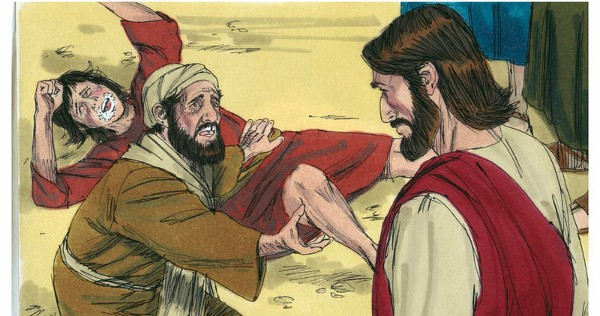
Sometimes in life, there are just some things that we can’t seem to overcome. There are many problems that, no matter how hard we try, are unsolvable.God gives all believers the power to encounter everyday life and to do his work in it all. Oftentimes we cannot solve problems, because we confuse God’s power and our power in God. In the Gospel of Mark, there is an account of Jesus performing an exorcism on a child. While Jesus was traveling around Caesarea Philippi, he reveals to his Apostles that he is the Messiah and that he will die and rise again after three days. Escaping the gathering crowd, Jesus took Peter, James and John to a mountain. There he “transfigured” or revealed his full majestic form in communion with Elijah and Moses. While Jesus was on the mountain he left the other nine Apostles behind with the crowd. During this time, a man brought his demon-possessed son was brought to the Apostles, having heard of the miraculous healing powers these men possessed. The Apostles...

Word for Word: Episode 36

לְאֹתֹת֙ וּלְמֹ֣ועֲדִ֔ים וּלְיָמִ֖ים וְשָׁנִֽים Signs, seasons, days and years Having made the earth habitable, God made the heavens useful. Aside from distinguishing day from night, the "clock" became a calendar. The word "signs" is the Hebrew אוֹת (ōth). As with the translation, the word indicates a signal. Signs identify the true state of things. The lights in the sky are used to confirm the message of the creator. A season (מוֹעֵד mo`ed) is an appointed place or time. Affixing the prefix "m" to the root verb יָעַד ( yâʻad) forms the noun. By watching the sky regular meetings and activities can be scheduled. The orbs and points of light also make it possible to observe special days. These include the first day of the month and year (Heb: שָׁנָה, shaneh). The year is marked when the sky returns to its original appearance. The word שָׁנָה is taken from the verb form shanah, the same root for the number two. The place of the earth among the heavenly ...

Word for Word: Episode 35

מְאֹרֹת֙ בִּרְקִ֣יעַ הַשָּׁמַ֔יִם Lights in the heavenly space The lights now commanded to take their assigned places are not the source of light that had shown on the first day. The word used here is מָאוֹר rather than the אוֹר of verse 3. This alone clears up the charge that there is an inconsistency in the account. The "m" as a prefix often indicates a place. The maorim are lit, or lit up, by energy that is not their own. Like lamps and mirrors, they need a light giver.

Word for Word: Episode 34

יֹ֥ום שְׁלִישִֽׁי The Third Day The primary root of the verb שָׁלַשׁ (shalash), translated "to do or be of a third part", may have originally meant "to intensify". However it always acts as a number in all its forms. The Hebrew word for three is שָׁלוֹשׁ (shalosh). In its use in the language, the idea of fullness is clearly seen. Many of the sacrifices had to be three years old, Elijah had water poured out three times. The third day often indicates a limit, as if to call for patience. On the third day the earth became fully suitable for habitation. Everything from this point on would be for the benefit of the inhabitants. The words in this portion: [`asah] עָשָׂה . To do, make, work, form [ raqiya` ] רָקִיעַ . Expanse, firmament. Literally, that which is spread out (from the verb רָקַע). [ tavek ] תָּוֶךְ, Within, among [ tachath ] תַּחַת . Under [" asher ] אֲשֶׁר . That, which, who [ sheni ] שֵׁנִי . Two, second. From the verb שָׁנָה (to...

Word for Word: Episode 33

פְּרִי֙ לְמִינֹ֔ו Fruit after its own kind From the very beginning, plants have been producing other plants, not in a generic way, but in a specific plan. Each one produces fruit that is expected from it. The word for this in Hebrew is מִין ("meen"). Its root meaning is "a portion, or sort". Each kind of plant has built in instructions to make more of the same kind. Much discussion has ensued as to what a "kind" is. The concept is plain: parent organisms produce others like themselves. The similarities are not just on the surface, so any observations should take context into account.

Word for Word: Episode 32

עֵ֣ץ פְּרִ֞י עֹ֤שֶׂה פְּרִי֙ Fruit trees making fruit The most advanced plant created by God's command was the `ets ( עֵץ ). From a word meaning "firm", the tree is attached to the ground, from which it gets water and minerals, while reaching towards heaven, from which it gets its strength and food. The tree and other plants become the means by which God perpetuates life upom the earth. The fruit (Heb:  פְּרִי peri ) of the trees, especially, provides a visible and portable way to spread the attributes of its parents.

Word for Word : Episode 31

עֵ֚שֶׂב מַזְרִ֣יעַ זֶ֔רַע Herbs producing seed The second class of plants was what is variously translated herb and grass. The עֵ֚שֶׂב (aseb) was a distinct class of plant apart from the sprouts, though the ancient root means essentially the same thing. It may be that both words refer to small plants in general in different stages of growth. If this the case, the sprouts grow to become seed ( זֶ֔רַע . zera` ) lbearers. The root of the verb form here, zara`, means to sow, that is, to scatter seed.

Word for Word: Episode 30

תַּֽדְשֵׁ֤א הָאָ֨רֶץ֙ דֶּ֔שֶׁא Let the land sprout sprouts In commanding the soil, God calls out first to a barren land. The ground had no seed of its own, so God must have created the plants in the dirt and in full bloom. The grass filled the land, glistening under God's light as it entered the leading edge of the globe. The word for the class of plant that came up is דֶּ֔שֶׁא (deshe) is from the verb דָּשָׁא (dasha) which means " to sprout, shoot, grow green". In the original text, the letters had no vowel points. This means the reader would use context and syntax to give the narrative life. The sense of the phrase is that God told the land to become green with grass, and it did.

Word for Word: Episode 29

תֵרָאֶ֖ה הַיַּבָּשָׁ֑ה The dry stuff appears When the deep waters drained into the reservoirs, dry land was revealed. The translators provided the word "land" as understood. What appears (or what God saw, see verb in v. 4) is literally just the local example of dryness (Heb: יַבָּשָׁה yabbashah). The damp rocky surface was likely dried quickly by the light from the creator. By the end of the rotation of the new planet, the soil would be supernaturally prepared, probably by the redirected waters rising from below.

Word for Word: Episode 28

אֶל־מָקֹ֣ום אֶחָ֔ד Into one place The chaos of the worldwide waters was incompatible with the controlled environment needed for life to begin. The action on the third day would bring order to the turbulence. The preposition אֶל ('el, "ale") moves the subject towards a destination, sometimes even within it. What used to cover the surface is said to have moved to a specific place, the מָקֹ֣ום (maqom), literally a place of standing.

Word for Word: Episode 27

יִקָּו֨וּ הַמַּ֜יִם W aters in waiting The word translated "gathered together" is the verb קָוָה (qavah). Though from a root meaning "to bind together", this word is most often used to convey the idea of waiting patiently, especially on the LORD. Since God commands that the waters upon the earth be gathered, it must be for a purpose. The waters had run free in chaos. But they were suddenly contained with limits. The mechanism is a mystery, but the origen of the verb may provide a clue. The gathering together is associated with twisting, as in making rope. Water is drawn into a vortex when provide an exit from it's settled state. This is seen in drains and waterspouts. It is consistent with the text and science to suppose that the subterranean cavities were opened to provide the underground irrigation needed on the young earth.

Word for Word: Episode 26

וַֽיְהִי־כֵֽן And it was so The most remarkable statement in the creation account is this little phrase. Whatever God wants, He gets. Furthermore, whatever He says is true. The word translated "so" is כֵֽן (keyn). It is from the verb כּוּן (koon), which means to be firm, be stable, be established. Though pagan kings would claim this status for their laws, it is absolutely true with God's decrees. From the first day on, the Creator spoke and things that came about were perpetuated throughout all of time. Where a human can direct things to be done ("make it so"), God doesn't delegate. He says "Let (it) come into existence" and it's there for good.

Word for Word: Episode 25

הַמַּ֔יִם אֲשֶׁ֖ר מֵעַ֣ל The waters which are above Proponents of a local firmament, that is the atmosphere, hold to one of two interpretations. The ambiguity allows either one. The most natural and expected is that the waters above are the clouds. Faced with evidence from the text of different conditions on the early texts and clues to a milder overall climate, others have proposed some kind of vaporous or ice layer in the upper atmosphere. However these waters above ( מֵעַ֣ל ) the firmament were possibly much further away. The format with both below and above appears to have the positions at extremes. The prefixes "m" and "l" are used in format " from here to there". Compare " מֵעַ֣ל לָרָקִ֑יעַ" with " מִתַּ֣חַת לָרָקִ֔יעַ". This leads some scientists to merge the text with observations of nature. The result works well both in nature and supernatural metaphor. The waters that once were together are now separated by insurmou...

Word for Word: Episode 24

הַמַּ֨יִם֙ אֲשֶׁר֙ מִתַּ֣חַת The waters which were below The conjunction, or relative pronoun, אֲשֶׁר (asher) is that, which or who, depending of the context. It points to what is related to the subject at hand. The conditions involved were locations centered on earth, the planet. Of the multiple uses, here erets must mean the much smaller body that would become the home of mankind. On this day the sky grows as the earth shrinks. The water below (Heb:  מִתַּ֣חַת ) that covered a rocky world spinning at a rate close to what it would spin for the rest of its existence. Above the waters was an envelope of air with water vapor in the form of a fog. The place called "below" is based on the root תַּחַת (tachath) with abbreviation מִן (min), where the {n} is absorbed. The result is a "prefix", the mem, which often indicates place.

Word for Word: Episode 23

רָקִ֖יעַ בְּתֹ֣וךְ An expanse within Left to itself, the new "water universe" was a competitive community of electrons, nuclea and photons with gravity overpowering the other forces. If God had not spoken again, His work so far would have collapsed in on itself. But once God starts something, He doesn't stop. He speaks again, beginning another day of creation . This time, he calls on the majority of the universal waters to be spread out (Heb: רָקַע raqa` ). The noun form in the text is רָקִ֖יעַ (raqi`a), an expanding wall of water coming from deep within ( תָּוֶךְ tevek) the sphere . God proves to be several steps ahead of nature from the very beginning. As the water is agitated, perhaps by microwaves of compressed light, it rises through the mass toward the voice that called it.

Word for Word: Episode 22

וַיַּ֣עַשׂ אֱלֹהִים֮ אֶת־הָרָקִי God formed an expanse Second to just speaking, that is programming the universe, the analogy to a potter with clay describes the work of God.  The verb used for this work is עָשָׂה (`asah) which means  to do, work, make, produce. It is often translated "to form". The second day of creation is the work of making a space to work. This includes building a "work bench". Given the nature of things, the sphere began to collapse upon itself at an exponential rate. But gravity was no match to the arm of God , which could provide an overwhelming "centrifugal force" that began at what would become the surface of the planet earth. In this miracle, the compact, stone hard water was softened and began spreading outward. In the space of one local rotation all that was left at the center was a spinning rock covered with water and an atmosphere.

Word for Word: Episode 21

יֹ֥ום אֶחָֽד Day One Among certain scholars there is discussion over what all is included in day one ( אֶחָֽד 'echad ). Some put the beginning in verse 1. Others follow the formula "And God said..." I lean toward the latter position. The length of each creation day does not necessarily have to be equal until life appears. Therefore, the gathering and organization of the raw material may be undated and "timeless". This could have been close to instantaneous or limited by the laws of physics. Furthermore, if the sphere of water was within time as we know it, it could have taken a decade or so to rotate before the second day began. This being miraculous in any account, God may have transcended the laws of physics. If this the case, the evidence is not in the text or nature. Though God was everywhere, the account indicates a light and dark cycle, three days before the sun was there. Today, three weeks in, is a good place t...

Word for Word: Episode 20

וַֽיְהִי־עֶ֥רֶב And there was evening In the process of creating the earth all the parts of the day were brought into existence at once.  Though things might seem flat, the earth, as created, was demonstrably a sphere. The light of day disappears gradually only when the globe turns away from the light source. The two main divisions of the the day, in a general sense, were the daylight and the dark night. These two were separated, but there remains a diminishing light after the sunset. This period is called evening, or עֶ֥רֶב (`ereb).This is from the verb .  עָרַב (`arab), to braid or intermix. It is an apt word only partly conveyed by the English evening. As our world rotated away from the now localized light of God's presence, the creation could mix cold waters with the energetic light-infused waters, moderating the temperature of the whole earth.

Word for Word: Episode 19

וַיִּקְרָ֨א אֱלֹהִ֤ים And God named... The verb  קָרָא (qara) means to address by naming. When God gives a name to something he defines its primary purpose or function. It is away to show sovereignty over that which is named. לָאֹור֙ יֹ֔ום Light is named Day By declaration, Light was called upon to be a unit of time. In reference to the earth, the daylight would be that part in which the lightbearer would light the inhabitants. The word  יֹ֔ום (yom) does not denote an exact period of time, but rather the nature of that time. וְלַחֹ֖שֶׁךְ קָ֣רָא לָ֑יְלָה And the darkness He called Night The naming of the darkness transformed chaos into a time for rest. The word לַיִל (layil) is a primitive one, but seems to have been derived from לוּל (lul), which means to fold back, that is, to turn around. In the naming of the periodic darkness upon the earth, God leaves a clue to how He "separated" the darkness. It was by turning the surface away from the light, blocking it f...

Word for Word: Episode 18

וַיַּבְדֵּ֣ל אֱלֹהִ֔ים  בֵּ֥ין הָאֹ֖ור וּבֵ֥ין הַחֹֽשֶׁךְ׃ And God separated the light from the darkness Some things just cannot exist together. After filling the universe with light, God reintroduced darkness. Light destroys darkness, but it's full effect can be toxic. Since the earth was to be the home to plants and animals that ate plants (or at least the fruit and seeds), Light had to be dosed properly. Darkness had to exist for life to thrive. Essentially, visible light is a small part of a wide spectrum of massless particles, or virtual particles existing in vibrations. Light reveals the substance hidden in a vast desert of "empty" space. These vibrations can be deadly at frequencies on higher than what we call violet, a dark blue color. On the other end, long invisible waves of light provide life sustaining heat beyond the red we see. Other benefits from these longer waves include radio waves that have been harnessed to carry information long distances. But ...